

Are teacup Schnauzers real? Learn the difference between teacup, toy and miniature schnauzers and why responsible breeders focus on healthy miniature schnauzers. Many people search for a teacup schnauzer, but the truth is a little more complicated. The official breed recognized by the AKC is the miniature schnauzer, and terms like toy or teacup are often marketing descriptions rather than separate breeds.
Teacup, Toy and Miniature schnauzers are a beloved breed known for their intelligence, charm, and versatility. Among the smaller variations of this breed, you may encounter Teacup, Toy, and Miniature Schnauzers. While these terms often cause confusion, they describe distinct sizes with unique traits. Let’s break down the differences to help you understand which Schnauzer might be the best fit for your lifestyle.
What Is a Teacup Schnauzer?
At Von Baron Schnauzers, I often get asked about “teacup Schnauzers.” The truth is simple: a teacup Schnauzer is not a separate breed or size recognized by the AKC. It’s just a term people use to describe a very small Miniature Schnauzer, usually under 7 pounds.
The AKC only recognizes three Schnauzer varieties—Giant, Standard, and Miniature—so even the tiniest pups are still officially registered as Miniature Schnauzers.
While the name “teacup” may sound cute, extreme downsizing can come with health risks. That’s why at Von Baron Schnauzers, I focus on producing healthy, well-structured, mega-coated Miniature Schnauzers with great temperaments, rather than breeding for the smallest possible size.
Teacup Schnauzers are not recognized by major kennel clubs like the AKC because they fall below the standard size for Miniature Schnauzers.
Their small size can make them prone to health issues, including hypoglycemia and bone fragility.
BEWARE OF THE HEALTH COMPLICATIONS WITH TEACUP SCHNAUZERS CLICK HERE
What Is a Toy Schnauzer?
A “toy Schnauzer” is simply a very small Miniature Schnauzer, usually weighing between 8–12 pounds. The term “toy” is not recognized by the AKC, meaning there is no separate toy classification for Schnauzers. Breeders may use the word “toy” to describe the smaller end of the Miniature Schnauzer size range, but responsible breeding should always prioritize health, structure, and temperament over producing the tiniest dogs.
Schnauzers are perfect for those who want a small dog but prefer a sturdier frame compared to Teacups.
They are lively, intelligent, and great with families, offering a balance between portability and durability.
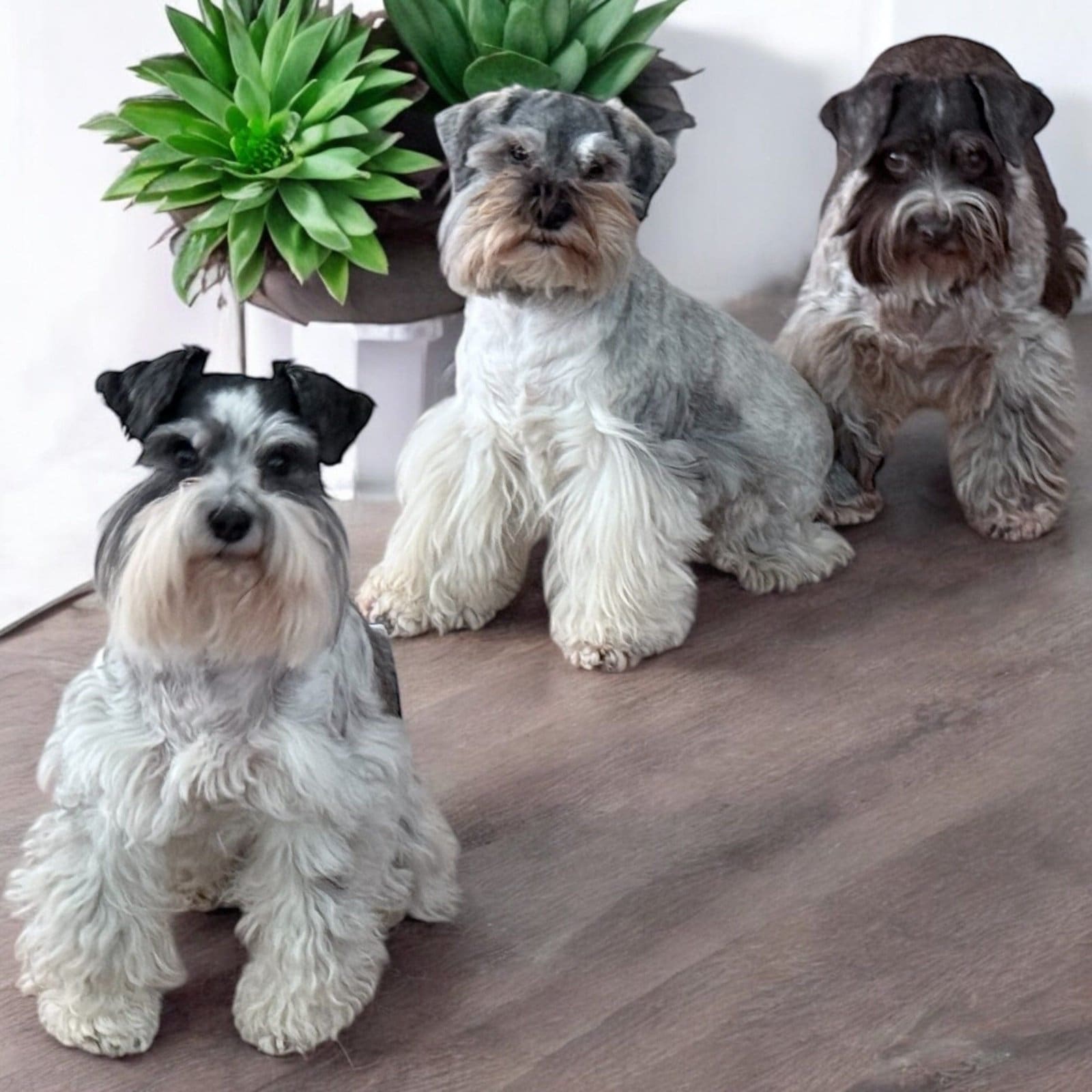
Miniature Schnauzers are a recognized breed by major kennel clubs, including the AKC.
Known for their energetic and loyal nature, they make excellent family pets and are robust enough for outdoor adventures.
Miniature Schnauzers are highly trainable and excel in obedience training, making them ideal for first-time dog owners.
Click here to learn about miniature, standard and giant schnauzers
Their slightly larger size compared to Teacup and Toy Schnauzers means they require more space and exercise. A fenced in yard is always best for a miniature schnauzer, but not required as long as you can take your dog on walks to get the appropriate exercise.
When deciding between a Teacup, Toy, or Miniature Schnauzer, consider your lifestyle, living space, and ability to meet their specific needs: The lifespan of all 3 miniature schnauzer sizes is the same as long as good quality food and care is given.
Click Here For Current Schnauzer Puppies For Sale
By understanding the differences between Teacup, Toy, and Miniature Schnauzers, you can make an informed decision and find the perfect furry companion to suit your home and lifestyle. I have toy and miniature schnauzer sizes. I rarely have teacup schnauzers due to the special care that is needed to raise them.
Extremely small dogs—often teacup, ultra mini or micro teacup may look adorable, but their tiny size can come with serious health considerations. While small breeds can make wonderful companions, breeding for extreme smallness can increase the risk of several medical issues.
One of the most common concerns is low blood sugar (hypoglycemia). Very tiny puppies have limited energy reserves, which means their blood sugar can drop quickly if they miss a meal or experience stress. Symptoms can include weakness, shaking, or lethargy, and in severe cases it can become life-threatening if not treated promptly.
Extremely small dogs are also more prone to fragile bones and injuries. Because their bones are so delicate, even minor falls from furniture or accidental stepping can cause fractures. Families with small children must be especially careful with these tiny dogs.
Another potential concern is dental disease. Small mouths often mean crowded teeth, which can trap food and bacteria, leading to plaque buildup and gum problems if not properly maintained.
In some cases, extremely small dogs may also experience organ and developmental issues because their bodies are under pressure to remain unnaturally small.
Read more about teacup schnauzers
Responsible breeders focus on producing healthy, well-balanced puppies rather than pursuing the smallest possible size. A properly bred miniature dog should be sturdy, active, and capable of living a long, healthy life—not fragile due to extreme miniaturization.